Environmentalism, Employment, and Entomology1 (“Dr. Zuparko”)
Although I’ve always enjoyed science and nature, I was never into bugs as a kid. My first experience with “pest control” was when my dad brought in a TON of manure to spread over both our front and back yards in preparation for replanting the lawns, which led to a huge population of flies buzzing around that summer. Ned and I had a great competition running around the place, seeing how many we could kill with flyswatters – the fly population was so thick we could whack several of them with one swing. But when growing up I became interested in environmental matters – I have no idea how that happened, as no one else in my family seemed particularly interested in the subject (back then, I categorized my interest as being “Ecology”, which I later learned was a completely different thing altogether). The trouble was as a kid with limited transportation and friends, there wasn’t much I could actually do, other than pick up aluminum cans from roadsides as I biked around the hills of Los Gatos, and (unlike everyone else) NOT rushing to get a driver’s license.
But I did attend the Survival Faire held at San Jose State College in February 1970 (which predated the first Earth Day by two months). The Faire lasted a week, but I was there only one evening, and thus I missed the highlight of the event, which was the burial of a brand new, never started, Ford Maverick (purchased in Los Gatos!). The only concrete personal thing that came out of my attendance was my signing a pledge with the group Zero Population Growth to produce no more than two children (later, I took the position by producing NO children, I might compensate somewhat for those who those who had more than two).
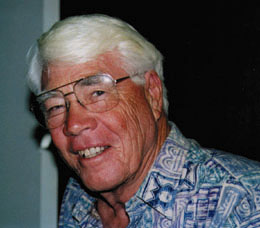
After high school, I was accepted into UC Berkeley, which had five undergraduate colleges – and was placed in the College of Agricultural Sciences. When asked to choose a major, I thumbed through the catalog looking for “Ecology” and to my dismay, saw that it was offered in the College of Letters & Science. So I asked to move over to L&S, but an administrator responded by saying I didn’t have to switch colleges, as I could study ecology in their Conservation of Natural Resources (CNR) major (the college has since been renamed College of Natural Resources, and the major Conservation and Resource Studies). That sounded OK by me, and it turned out to be a great boon. Back then, perhaps 90% of undergrads were in L&S, where students were arbitrarily assigned a faculty advisor for counseling and had to make appointments to see them – there was minimal chance of one-on-one help. On the other hand, in Agricultural Sciences I was given a list of three faculty members to interview. If I liked one of them, they’d become my advisor, but if I didn’t, I’d be given a list of three more. As it turns out, one of the initial three was Dr. Evert Schlinger (Fig. 6.1). He was very personable (and the only person I knew who smoked Tiparillos), so I chose him, and it just so happened he was an entomologist. He asked me if I had ever considered studying insects and I said no – at the time I was still focused strictly on “clean environmental” issues. But just because he asked the question, I did take an introductory course (Entomology 10) which basically consisted of sitting in a classroom while Ed Ross (then a curator at the California Academy of Sciences) showed his slides. And while the class was easy, it didn’t inflame any passions in me.
In the CNR major, students chose a topic of interest to specialize in. By now, I realized that ecology was NOT what I thought it was; however, I realized that one good way to “protect” the environment would be to reduce the indiscriminate use of pesticides, so I chose as my topic of interest Insect Pest Management (IPM). At that point I still wasn’t enamored of insects – I was just interested in a “cleaner” means of killing ‘em. But I took some more entomology classes and found I liked the subject. One class was Entomology 100, which included lectures and labs, for which my T.A. was Alan Kaplan2. One day, we had a few minutes to kill, and Alan chose that time to test out a statistical problem, to wit: if you have a random selection of 23 people, the odds are 50:50 that at least two of them will share the same birthday. Alan noted that we had about 25 people in the class, and asked for a show of hands: who had January birthdays? A couple of people raised their hands, and Alan asked them which day they were born, but there were no matches. He then asked how many people were born in February – two raised their hands, but again they didn’t match. So Alan went on, checking month by month, all with no matches … until he reached December. Several people raised their hands, including two of them had the same date. And thus the statistic held up.
And then I was introduced to the topic of biological control (BC): using biological agents (usually insects) to reduce the population of pest species. I was particularly drawn to the idea of classical BC. This was based on the idea that crops, their insect herbivores, and the herbivores’ natural enemies, all evolved together and tended to have stable populations. Pest problems were triggered when humans started messing with things, like taking a plant that had originated in the Old World and moving it to, say, the New World, and then growing it in a monoculture. Often the herbivores were inadvertently transported as well, while the natural enemies were left behind. This resulted in massive increases in the herbivores in the new location, leading to crop devastation, and then massive insecticide usage. Classical BC involved going back to the center of origin of the plant (and herbivore) and looking for the natural enemies that attack the herbivores. After undergoing testing and taking other safeguards, those natural enemies are then introduced to the new location, where (hopefully) they will survive and then reestablish the population stability found in the original area. And while insect predators (think lady beetles) can be useful in this role, a group that is MUCH more effective are the insect parasitoids (most parasitoid species kill their host, while most parasite species do not). And of these, the most important group is the parasitic Hymenoptera … but more of that anon.
I wanted to get into the BC field, and in California that meant one of three options. The first was to work in forestry IPM, and although I liked walking in the woods, I was not interested in working in them. The second was agriculture IPM, which basically meant the Central Valley. And having taken a field entomology course at Kearney Field Station in Fresno County (we students stayed in a dorm at nearby Reedley College3) in the summer of 1973, I sure as hell didn’t want to spend any more time in that type of heat. That left Urban IPM, and coincidently, in my last year at college, I met the Olkowskis.
Bill Olkowski had a PhD in entomology and thus was always the lead researcher, while his wife Helga provided non-entomological expertise in writing and organization. Bill and Helga (they always insisted they were a team, and we sometimes referred to them as Billga) (Fig. 6.2), were extremely active in the environmental field, starting in the late 60’s. Among their activities was helping to create Berkeley’s Ecology Center, and the pioneering of a “self-reliant urban homesteading project” (which integrated water and energy conservation, agriculture, and composting): the Integral Urban House in Berkeley. Their authorship credits include The City People’s Book of Raising Food (the cover of the book is a drawing of their house on Acton Street), Common Sense Pest Control and The Gardeners Guide to Least Toxic Pest Control.
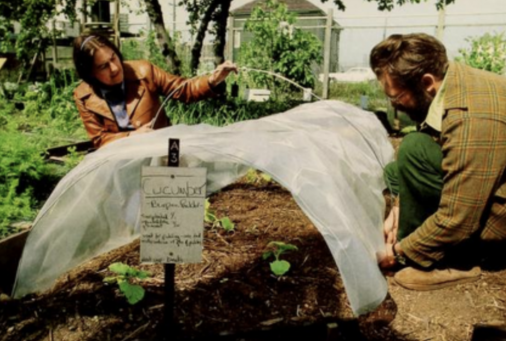
Bill had a position at UC Berkeley’s Division of Biological Control (then operating out of the University’s Gill Tract at the corner of San Pablo and Marin Avenues in Albany), where he directed an Urban IPM program. At its peak, the program had as clients five cities (Berkeley, Davis, Modesto, Palo Alto4, and San Jose), where we were tasked with dealing with pests of shade trees along city streets, and one school district (Palo Alto Unified School District), where we mainly dealt with cockroaches. Immediately after I got my BS in December 1975, I began to work for the Olkowskis (they were concerned that my diet was not particularly healthful: when I occasionally brought in doughnuts to work, they suggested that I switch to bagels instead – after all, they were the same shape … but sadly, this never took). Besides a paycheck, this job provided me with another benefit: a firsthand exposure to those Hymenopteran parasitoids which can be so beneficial and intriguing. Other people who worked for or with Bill and Helga at that time were Tanya Drlik (who I referred to as TD, while she returned the favor, being the first to refer to me as “BZ”; that appellation didn’t take hold at the time, but see Chapter 5), Bill McNulty, Gary (later Gar) Satrom, Dave Stephens (who married Jane Timberlake, a descendent of P.H. Timberlake, one of the “most prolific entomologists of the 20th Century”, according to Wikipedia), Mark Minter, Neal Heidler, Dave Rowney, Linda Schmidt, Linda Orthel, Karen Davis, Earl White, Dave Tamayo, and Sheila Daar.
I was never significantly involved with Davis, Modesto, or the school district, but ultimately was responsible for our activities in Berkeley, Palo Alto and San Jose, where the main problems were two types of defoliators, California oak moth, Phryganidia californica Packard (Lepidoptera: Notodontidae), on holly oaks and elm leaf beetle, Xanthogaleruca luteola (Müller) (Coleoptera: Chrysomelidae), on European elms, and several species of aphids (all Hemiptera: Aphididae) which caused massive honeydew production: Illinoia liriodendra (Monell) on tulip trees, Periphyllus lyropictus (Kessler) on Norway maple, Eucallipterus tiliae (Linnaeus) on lindens, and two species, Callipterinella calliptera (Hartig) and Euceraphis betulae (Koch) on silver birch. Other minor pests that we dealt with included the blue-green sharpshooter, Graphocephala atropunctata (Signoret) (Hemiptera: Cicadellidae) on liquidambar, western boxelder bug, Boisea rubrolineata (Barber) (Hemiptera: Rhopalidae) on boxelder trees, fall webworm, Hyphantria cunea (Drury) (Lepidoptera: Erebidae) mostly on liquidambar, and crepe myrtle aphid, Tinocallis kahawaluokalani (Kirkaldy) (Hemiptera: Aphididae) on, yep, you guessed it, crepe myrtle trees. We typically had three methods for dealing with these pests. Against oak moth, we’d sample the affected trees (by walking around a tree and counting the number of caterpillars on 25 stems) to determine which ones had the highest pest numbers, and mark those that had a population above a certain threshold for treatment with the bacterium Bacillus thuringiensis (BT) (a safe biopesticide, as it affected only caterpillars). For elm leaf beetle, we released two species of parasitoid wasps. We also released a couple of parasitoid wasp species for some of the aphid species, as well as recommend the city use water trucks to wash off the aphids and accumulated honeydew from the foliage. Typically I’d go to a city one day a week, where I would help the city staff deal with complaints filed by homeowners, conduct sampling of oak trees to determine if they need to be treated, and conduct weekly monitoring studies to assess the success of the aphid parasitoids we had released.
This was a difficult and time-intensive job, especially in 1976-77, when San Jose was experiencing a massive oak moth outbreak, and I’d have to go down there an extra day each week to do sampling – I can’t tell you how sore my neck was by the end of the day from having to look up at the canopy of hundreds of trees. My other big pain was dealing with aphids (especially on tulip trees), as the honeydew got all over everything (hands, pencils, clipboards, steering wheels), making for a really “sticky situation”.
I can’t say that the program was an unmitigated success. True, we DID succeed in our primary goal of reducing pesticide usage, and we at least introduced the cities to the idea that truly managing pests entailed more than just spraying toxic chemicals, but many homeowners were not satisfied with the degree of pest reduction. And the funny thing is, it all became moot after 1978. In that year, voters in California passed Proposition 13, which capped property taxes, resulting in a huge decline in city revenues across the board. This led to a lot of cities cutting all sorts of programs, including not only our Urban IPM project, but pest treatments in general. And about that same time, the UC administration decided that our program was not doing “research” as such, but merely provided a service to non-University clients, and booted us out of the system. Ther administration of our program was then transferred to a non-profit corporation called the John Muir Institute, led by Max Linn up in Napa, while the day to day operations were run out of Bill and Helga’s house on Acton Street in Berkeley.
In 1979, I was, as they say, “let go”, and spent a little time on the public dole. However, I still had my eye on entomology and decided my prospects would benefit if I could point to a published paper on my work. Working with the Olkowskis gave me four years of monitoring a population of aphids and their parasitoids on a stand on linden trees in San Jose, and I decided to add a fifth. So, from May through October of 1980, I drove down to San Jose every week to get another season’s worth of data. Then over the next three years I struggled with writing up the results, getting some figures produced (at a blueprinting outfit on University Avenue in Berkeley), getting the manuscript reviewed, rewriting it, finding someone at the Gill Tract who could provide a translation of the abstract into French, and finally submitting it for publication. It wasn’t earth-shattering research by any means, but doing it all on my own was quite a learning experience, and I think, helpful when I applied to grad school four years later.
Starting in the last half of 1980, I had a series of three jobs. In August I got a job as a courier driver for TransBox. Our shifts started at the Oakland Airport around 6pm and the routes took us around the greater Bay Area – we would pick up documents from various businesses (Grand Auto, Seven Eleven, and Safeway were three of the chains we serviced) and get them back to Oakland Airport in time for a 2 am flight. The shortest route was up to Napa and back, while longer routes took me to the Peninsula and San Francisco, throughout Fremont and San Jose, and even down to Monterey – that last route was about 250 miles, and to help stay alert I would buy a bag of Cheetos to munch on while driving. Since I do not pretend to be a fastidious eater, for years afterwards it did not surprise me to find old Cheetos under the seat or elsewhere in the car. TransBox also had an interesting option for us drivers. Our salary was $3.25/hour, which was taxable. BUT if we chose to use our own cars, they would reimburse us for that at the additional rate of $5.35/hour, which was not taxable. We did pay for our own gas, but that was under $1.50 gallon back then, and for those drivers like me who had fuel efficient cars (my Honda would get 35-40 mpg), it worked out pretty sweet for us.
Then in September I then took an H&R Block training class as a tax preparer, and worked the tax season of January-April of 1981. This was a nice little job for someone who is not afraid of numbers. There were several satellite offices in the area, but I worked in the company’s main office on San Pablo Avenue in El Cerrito … and thus could benefit from the presence of the instructor, Suzanne Clark, if I ran into a problem5. H&R Block charged a flat fee for the basic 1099, with more charges for each additional form processed – each one of which upped your pay a fraction. January was slow, but things picked up in February after workers began to receive their 1099s from their employers. Things quieted down in March but come April 1st everything ratcheted up as the procrastinators began to show up in droves. Then on April 15, all the satellite offices closed down at noon, and those workers came to the main office, where it became something of a party atmosphere – lots of folks to talk to and lots of food to munch on as we shifted into high gear to get everything processed before midnight.
Meanwhile, two friends I had met when working with the Olkowskis, Dave Stephens and Gar Satrom, had started their own business (Beneficial Biosystems) in Emeryville. They sold parasitoids and traps for controlling flies, and after my H&R Block job was over they took me on for a month or so.
Then a fellow Scottish country dancer named Don Kennedy told me that the Oakland Post Office was hiring, so I thought I might give that a shot. I passed the exam and became a Letter Carrier in May 1981. The first year was pretty tough, since rookies were continually moved from route to route, and there is always a steep learning curve for each new route, but after a while I got my own route at the Emeryville office (then located on San Pablo Avenue near 43rd Street) and things settled down. Because the Post office delivered mail six days a week, they had an interesting scheduling system, wherein your SDO (standard day off) shifted one day later each week. For example, in one week you worked Monday-Thursday, have Friday off, then work Saturday (we always had Sundays off). Then the next week, you worked Monday-Friday and have Saturday off, and the following week you’d have Monday off. That means, once every 6 weeks, you work 6 days in a row, BUT also once every 6 weeks, you’d get a three day weekend (Saturday-Sunday-Monday), which was really sweet. However, the mail MUST go on, so if a carrier called in sick or otherwise was unable to work their shift, the supervisor would first call a person who had the day off to come in and cover for the missing employee. So, if there was a telephone call early in the morning of your day off, you would answer it if you were interested in the overtime, but let it ring if you had other plans for the day. The supervisor’s other alternative was to divide the non-covered route into “sections” (each of which took about an hour to deliver), and parcel those out to the other carriers present, providing those people each with another hour of overtime.
Besides working overtime, there were a couple of downsides with the job. Once I was bit by a mangy dog that I made the mistake of turning my back on … luckily it was an old dog with blunt teeth, and the skin on my ankle wasn’t even broken. And when a patron did not receive the government check he was expecting, he blamed it on me and grabbed me with one hand by the front of my shirt just under the neck – something I had only seen done in movies before6. On the other hand, beside the handsome salary and health benefits, during the summer (when it stayed light until after 8pm), I could bring my hang glider with me to the Post Office and store it there until I got off at 3:30pm. I would then pop it on my car, and easily drive over the Bay Bridge (there was a lot less traffic then than now), and get to Funston by 4:30, where I could still get a couple hours of airtime … ON A WORK DAY!
I quit the Post Office in May 1985 in order to get married and accompany my blushing bride up to Pullman, Washington, where she had a one year veterinary internship at Washington State University (home of the WSU Cougars), in the heart of the Palouse (Fig. 6.3) where winter wheat was the major crop. The two of us took six vehicles, travelling two days trip to get there: Carolynn drove her own car, while my hang glider was strapped to the roof of my Honda, which in turn was attached via a tow bar to a rented Ryder truck (which held our two bikes) that I drove; we bought a pair of walkie talkies or CB radios so we could communicate with each other during the ride. The most memorable part of the trip was witnessing a lightning storm just as we stopped for the evening near Mr. Shasta.

The year we lived there was the closest thing I had to living near a rural environment – our house was in town, but the nearest other town was Moscow, Idaho (7 miles away); a sign on a diner in town boosted the local economy on its signboard thusly: “Go Cougars, Go Wheat, Show them what the big boys eat”. Although I was never into rural living, being in Pullman was a blast, because of the new experiences … and a knowledge that we’d only be there for 12 months before moving on. It was the first time I lived in a place where the four seasons were really pronounced (Fig. 6.4), while one of the highlights for me was when Carolynn and I signed up for a road rally, where the goal was to follow navigational challenges to arrive at a given point at a given time (not something that can be done in an urban environment due to much higher traffic volume).

I had no obvious employment opportunities in Pullman (I inquired, but their Post Office was fully staffed), so as a way of putting my toe in the entomological waters, that fall I decided to audit some classes. I took insect morphology under Dr. Roger Akre at WSU (who was quite surprised that anyone would take that class for fun), and anatomy & physiology under Marc Klowden at the University of Idaho at Moscow (just seven miles to the east across the state line). This led to me enrolling as a “provisional” grad student in Roger Akre’s lab in the following spring semester, where I helped map the structure of yellow jacket nests, and search for Microdon (Diptera: Syrphidae) in ant nests around Moscow Mountain. I also met Rich Zack, the curator the M.T. James Entomological Collection at WSU, with whom I enjoyed discussing PAC-10 football news.
When I was in high school, I didn’t cut class, (mostly7) paid attention while in class, and did my homework … but I didn’t really APPLY myself, and was still able to cruise through there with a 3.0 GPA that qualified me to be accepted in the University of California. Unfortunately, when I maintained that same policy during most of undergraduate days at Cal, my grades suffered. In my very first quarter, I took four classes and received 2 B’s and 2 C’s, for a GPA of 2.5 – which turned out to be the high water mark (as far as my grades went) of my undergraduate career. I got some more A’s as a junior and senior, but they did not move the needle much GPA wise when combined with all the C’s (plus three Ds and one F) that followed. Well, at that point I was not considering grad school, so although my pride was hurt, I didn’t worry about it too much. But in Pullman I had very little else to distract me (Carolynn was pulling long hours at the vet hospital), so I seriously upgraded my study habits. Akre’s course in Insect Morphology was a particularly tough one, while his class in Insect Behavior necessitated writing, and then rewriting, lab experiments. I never considered myself a good writer before, but toiling over those lab write-ups proved to be a game changer for me. And when I returned to Cal as a graduate student, I discovered the wonderful learning method of rewriting my class notes immediately after returning home – that really worked to burn the information into my brain, and made studying for exams much easier and more efficient (this was LONG before students started using laptops in class to take notes).
After a year in Pullman, Carolynn and I moved down to Pittsburg (California) where Carolynn had landed a job. There, I took some courses through UC Extension, as I had my eyes seriously set on getting back into Entomology. The classes were at UC Berkeley, so I had a long commute: driving to the north Concord BART station, taking BART to the Rockridge Station, getting my bike out of a locker there, and then cycling into campus (I could have avoided taking a car altogether, as there was a city bus with a stop near my house that would take me to the BART station, but that would have added almost another hour to my already one-way hour plus commute). Additionally, I paid my own way to accompany Leo Caltagirone when he travelled to Chile in February 1987, looking for natural enemies of the pepper tree psyllid, Calophya schina Tuthill (Hemiptera: Calophyidae). One of the most memorable things about that trip was my introduction to “Brazo de Reina” (the Queen’s arm), a delicious dessert prepared by Leo’s sister – damn it was good (even though it didn’t include chocolate).
Later that year, Carolynn got another job in Oakland, and so we moved back to her family home with her father and brother (saving us the expense of rent). I was accepted in the Entomology graduate program in U.C. Berkeley’s College of Natural Resources, under Don Dahlsten. My research was basically a return to my “Olkowski roots” – both in a biological sense (studying the parasitoids attacking aphids in the Bay Area) as well as physically, since Don’s lab was at the Gill Tract in Albany as well, along with other luminaries of biological control as well, including Ken Hagen, Leo Caltagirone, Dick Garcia and Miguel Altieri (Fig. 6.5)8. I initially entered in a Masters Program, and began to work on the parasitoids of the tuliptree aphid, but later transferred to the PhD program and switched my focus to the biological control of the linden aphid. My lousy undergraduate GPA precluded me (at least initially) from receiving a fellowship from the University, but having both free rent free and a supporting wife, I did not feel the need to become a teaching assistant (a job that many graduate students find necessary to take), thus allowing me more time to concentrate on my studies9.

In 1988, I attended the 7th in a series of Parasitic Hymenoptera training sessions (organized by the Systematic Entomology Laboratory of the USDA), that year held at the University of Maryland in College Park; organized by Charlie Mitter, the instruction staff including the most eminent (North American) specialists of the group: Eric Grissell, Paul Marsh, Lubomir Masner, Arnold Menke, Michael Schauff, David Smith and David Wahl (Fig. 6.6).

In the late 1980s, there was a radical reorganization of the College, and in response the graduate students reinstituted the defunct Entomology club as the Entomological Students Organization, to continue the social/fun aspects of the club, as well as to provide the students with a formal voice in the reorganization, and I was the first treasurer.
One of my favorite memories from grad school was participating in the Linnean Games. The Games are sponsored by the Entomological Society of America, and follow the same format of the TV show College Bowl. Entomology programs across the country put together teams (usually four or five grad students) that first compete in the regionals organized by the five geographic branches of the Society. Those winners move on to face off at the Society’s annual meeting in December. In 1991, the annual meeting was in Reno, which was just a hop, skip, and jump up highway 80 for us, so Howell Daly, a professor at Berkeley, thought this would be an excellent time for us to field a team and make the most of the logistics of our “home court advantage”: we could rent a van to take us there, while teams from other areas had to fly in. The siting of the Pacific Branch’s regionals, worked even better for us – they were held in Davis, just an hour and a half drive away. Our team was five: Merle Dormand (captain), Wee Yee, Dan Oppenheimer10, Michael Prentice, and myself (Fig 6.7). Daly presented us with a copy of the questions used at previous games, and we set ourselves to studying them. Usually, a lot of students who attend the annual meeting also present a paper or poster, and thus they have two things to worry about. I on the other hand had no such presentation, so I could concentrate on just boning up for the games. And we were successful: our team placed first at the Regionals in Davis, and then in Reno we narrowly beat the University of Georgia (85-80) to win the national championship (Wee Yee was on fire that day).

In comparison to this, a much less-than-satisfactory experience was when some entomology students formed a team to join the intramural softball league. We did OK, but got absolutely POUNDED by the team from Botany – their shortstop hit a homer every time he came up to bat.
Then in 1993, I was voted (by acclamation) the sexiest (male) parasitic Hymenopterologist of the International Organization for Biological Control (Pacific Slope Division). The fact that this award was later rescinded and bestowed upon the first runner up (Matt Buffington), can only be ascribed to a shady back room deal between a cabal of ichneumonidologists and cynipologists; I still maintain that reports of money changing hands between myself and unindicted co-conspirators 1 and 2 are misrepresentations of personal loans and/or have no basis in fact; besides, I have it on good authority that all records of such transactions have disappeared11.
In August of 1995, I attended the International Society of Hymenopterists held a meeting at UC Davis; at one point the Chalcidologists attending the meeting gathered for a photograph, which included some of the world’s foremost experts in that group (Fig. 6.8).

Typically, after a student completes a PhD in a scientific field, they get on an academic or other professional track that necessitates competing for scarce jobs that may take them to another city, state, or country. However, I was never that competitive or ambitious, I liked living where we did, and I had no need to be the breadwinner of the family, as we were living in Carolynn’s family home rent free, and she was earning more as a veterinarian than I could as a post-doc entomologist. So after I completed my PhD in 1995, I was happy to be retained in Dahlsten’s lab to work part time on BC projects until 2001 (and in 2003 I went to Australia in his place to look for natural enemies of Eucalyptus psyllids). One of my strongest memories was my first trip with Dahlsten down to the Prunedale region of Monterey County to visit the plantations of Eucalyptus pulverulenta used for flower arrangements the leaves. This tree had leaves with a growth pattern I had never seen before (Fig. 6.9), and it was cultivated in much the same ways grapes are grown, and seeing row upon row of this strange plant put me in mind of an alien landscape.

In 1997, I got two part time jobs. The first was working as an assistant, one day a week, at the Essig Museum of Entomology at UC Berkeley. This involved general museum duties such as handling loans, updating the collection, and the like (interestingly, one of my mother’s co-workers was a woman named Dr. Jones, who turns out was the daughter of E.O. Essig, for whom the museum was named). My first supervisor there was Cheryl Barr, who was later succeeded by Pete Oboyski – others associated with the museum included (at one time or another) Jerry Powell, Kip Will, Kathy Schick and Roberta Brett (Fig. 6.10).

The other job was half-time employment in the Department of Entomology at the California Academy of Sciences (CAS) in Golden Gate Park in San Francisco (Fig. 6.11)12. This was to be as a curatorial assistant working under Charles Griswold, who specialized in spiders. I knew (or cared) little about spiders, but a job is a job, and museum jobs have always been few and far between. But I lucked out because Darrell Ubick, who was then working as a curatorial assistant under Wojciech Pulawski (a specialist in Hymenoptera), preferred to work on spiders. So basically we swapped jobs the moment I was hired – Darrell transferred to work under Charles, while I began under Wojciech, making everyone happy. After later reshufflings of staff, I worked under the collection manager Norm Penny (who worked mainly on Neuroptera and Mecoptera) and Brian Fisher (who specialized in ants). For both the Essig and Academy positions, besides conducting my normal duties, I was given free rein to go through the collections of parasitic Hymenoptera, sorting and identifying undetermined material, and updating old identifications when necessary. For someone who gets a tremendous kick out of organizing things, this was sheer nirvana.

A lot of staff members at the Academy were also deeply involved in the Pacific Coast Entomological Society. I joined the Society as well, and in 2001 (following my experiences with Cabbage Records, the RSCDS, H&R Block, and the Entomological Students organization), became the Treasurer. By then I had had lots of experience cooking books, moving funds around, and studying the tax codes of Switzerland and the Cayman Islands, so I knew I’d always have a nest egg to fall back upon, should I be forced to leave the country expeditiously. And as an officer in the Society, I was twice approached (via email, of course) by scammers looking to make some quick do-re-mi. I decided to have some fun with them, which is (fastidiously) detailed in Appendix J.
As it turns out, I was professionally active during a time of great change in both of the two major Entomological institutions in the San Francisco Bay Area. The CAS moved twice: in 2004 the Academy decamped from its location in Golden Gate Park to a temporary site on Howard Street (in downtown San Francisco) while the original building was razed and then rebuilt. This involved a complicated procedure of readying specimens for transport and then trucking them across town once newly ordered storage cabinets were installed. Then in 2008, we returned to the original site in the Park, when we had to move those new cabinets as well as the specimens. In 2015, I took the lead for a project that had us dumping half of the department’s physical reference library to make space available for more workers.
Similarly, I was involved in a couple of moves (and accompanying library downgrades) across the Bay. In the early 1990s, it was decided to close the University’s BC operation at the Gill Tract, and move it to the Oxford Tract, which is much closer to campus. This entailed moving the insect collection held there to the Essig Museum, as well as dealing with the voluminous reprint collection that acquired over the decades. Then in 2013, the Essig Museum moved from Wellman Hall across Strawberry Creek into the Life Sciences Building, again necessitating the disposal of a large number of reprints.
However, even as I was getting close to finishing my graduate work in 1995, the appeal of BC began to wane – possibly because I was getting sick of dealing with sticky honeydew, or possibly because I detested having to repeatedly count the number of aphids (often several hundred) on a tree leaf. So when I was hired at the Essig and Academy, I already had a decent general background in the order Hymenoptera, but I knew that if I wanted to contribute anything important to the advancement of science, I’d have to choose a subgroup to specialize in. At that point, I was mostly familiar with aphid parasitoids … however by now I found them pretty boring. In contrast, I started to be more intrigued by members of the superfamily Chalcidoidea. Ultimately, out of that broad assemblage of species, I chose to focus on the family Encyrtidae (Fig. 6.12), not only because of their intrinsic beauty, but because so many of them are important in BC … and soon I was besotted by a new mistress: that of encyrtid taxonomy.

In the 1990’s, I’d say there were fewer than two dozen people in the United States who were publishing anything on encyrtid taxonomy, while the only general systematic works on the encyrtids of the United States were two identification keys (published in 1978 and 1997) to the Nearctic genera. Thus the field was wide open for me to jump in and add my own contribution, and I set myself the goal to formulate a checklist of all the species of the family in California. This was done on my own dime, with no support from my employers, other than establishing my bona fides for any governmental permits I needed to apply for.
And man, was it fun.
First, let me say that, like my ability as a dancer or hang glider pilot, I never considered myself anything but a middling entomologist. However, because I chose to specialize in a group that very few others studied, I was regarded as the local “expert” generally on parasitic wasps, and for encyrtids in particular (and to the non-entomologists of my acquaintance, an expert on insects in general), which is woefully overblown.
For my study of California encyrtids, I already was familiar with the specimens from the Berkeley and Academy collections, and I went on to examine specimens from several other museums as well, including a couple of trips to UC Riverside and the US National Museum in Washington. But I knew I had to collect more specimens on my own. I went on the annual collecting trips the Essig Museum organized to various sites throughout the State, as well as participated in the Bioblitzes sponsored by the non-profit group Save Mount Diablo in their lands adjacent to the State Park13.
But the majority of my collecting was done solo, mostly within a one to two hour drive of my home in Oakland. Additionally, every year I’d also go out by myself on a three or four day collecting trip (sanctioned by Carolynn, mind you!) taking in all portions of the state, especially those of the Coast Range, lower Sierras, lower Cascades and the Modoc Plateau. And because I owed nothing to nobody, I felt free to visit some sites just because their names intrigued me: Parkland (“Earthquake capital of the world”), New Idria (a ghost town where they used to mine mercury, Fig. 6.13), Hobart Mills, and Hallelujah Junction (Fig. 6.14); I sampled at Hat Rim Creek just because I knew it was a hang gliding site (and even met a pilot there who was about to launch). I collected in some gorgeous locations, like off the Fairfax-Bolinas Road in Marin County, which afforded a spectacular view of San Francisco Bay (Fig. 6.15), but because encyrtids tend to be more common in warm, dry locations, I spent a lot of time in locations that were not so picturesque (e.g. one of my most productive sites was alongside Highway 395 near Doyle in Lassen County, Fig. 6.16).


Another great site was Del Puerto Canyon (in western Stanislaus County), a little over an hour drive from my house. My first visit there was for a collecting trip in one of my classes in the 1970s, where it proved to be a nice site for those making a general insect collection, especially high up the canyon at or near Frank Raines Park (Figs. 16.17, 6.18). When I began my collecting there in the 2000’s I found it to be a rich source for encyrtids, and returned there repeatedly. In 2009, Norm Penny mentioned that “Graffiti Rock” in the Canyon was one of his favorite collecting sites. Well, I was familiar with the place – the creek flowed right next to the roadway where there was a gigantic boulder (perhaps 15 or 20 feet high) that was covered in graffiti – but I hadn’t collected much there. But that conversation with Norm spurred me to stop there on my next visit to the canyon, and I spent some time just a couple of hundred yards up the road from the boulder (Fig. 6.19). And when I got back home (that’s one of the problems with collecting micro-Hymenoptera – you often don’t know what you’ve collected until you can get it under a scope), I saw that some of my specimens were very distinctive: all black except for a yellow band around the middle of their bodies. I was confident this was a new species, and was determined to get some additional specimens. This was in late June, and over the next three weeks I returned there seven times, in 90-100° heat, and being a cool weather person, this was something of a trial for me. But in the end I got a decent number of specimens, so I considered my trials and tribulations well worth it. That is, until two years later, when I was out for a short walk in my neighborhood. My walk took me along Monroe Avenue where it crossed a golf course and bordered by a ditch running through some grass and low vegetation (which is a good habitat for finding encyrtids). I thought, “What the hell?” and went home, grabbed my net, and came back to sweep the vegetation. So there I am, literally a 10 minute walk from my house (Fig. 6.20), and I’m netting this same black and yellow encyrtid, that two years previous I had to endure a 2.5 hour round trip (plus sweating in a blast furnace) to get.


Another favorite collecting site of mine is Mt. Diablo State Park, just east of Walnut Creek, especially near the summit (Fig. 6.21), as well as Perkin’s Gulch on the east side of the Park (Fig. 6.22). During their period of colonization of California, the Spanish initially called that area “Sierra de los Bolbones” – referring to their name for the Miwok Volvon tribe that lived there. In 1806, some recently baptized Native Americans fled the missions and headed for this area, and Spanish soldiers were sent to retrieve them. The natives took cover in a thicket near Pacheco, and eventually escaped across the Carquinez Strait, an act only possible, so the soldiers thought, to the intercession of supernatural forces, and called the area “Monte Diablo” (the thicket of the devil). Later Anglo settlers thought that “Monte” must refer to a height, and thus transferred that name to the great isolated mountain of the area. A good part of the mountain is in private hands, but the central portion (with the greatest diversity of habitats) is a California State Park, and they require permits to collect insects. These permits can be difficult to obtain, although ultimately I did get one. But before then, as they say in court proceedings, HYPOTHETICALLY I could have been walking up a really steep slope on the east side of the summit with my net in hand. And as I came around a corner, I was instantly passed by someone whizzing down the trail at high speed on a mountain bike. I smiled at him as he sailed by, only then realizing he was a likely a park ranger, and was rapidly braking to a stop.


“Shit”, I thought, “my goose is cooked.” But his momentum had taken him almost a hundred yards further down slope before he could stop (Fig. 6.23), and then he’d have to turn around and come up that steep hill to confront me. So I kept my cool, and nonchalantly continued to walk uphill, not looking back. But the moment the trail took me around some vegetation and I was momentarily out of sight, I ducked into a grove of trees perhaps twenty yards off the trail (Fig. 6.24), where I hunkered down for 10-15 minutes, giving him time to clear the area, and then for me to hightail it back to my car unobserved. And thus I was proud to further add to the lore of the supernatural disappearances of scofflaws, on or near Mount Diablo.


I noted previously that I was not very ambitious on a professional level, but back in the 1970s, I did have a couple of (albeit fairly modest) ambitions: to go on a foreign exploration trip for a biological control program, to describe a new species, and to have an insect species named after me. As I progressed through my career, I had forgotten about those goals, but now that I look back, I was happy to realize that I had indeed succeeded in all three. Not only have I authored or coauthored about 40 papers (q.v. Appendix E, part 1), but my travels to Chile in 1997 and Australia in 2003 fulfilled goal #1, while in my work with aphids, psyllids, and encyrtids I authored or co-authored descriptions of seven species of parasitoid wasps which fulfilled goal #2, and in recognition of my assistance to various systematists, thirteen species and one genus were name in my honor (mostly parasitoid wasps, but also an ant, a fly, and a true bug) (see Appendix F; my name was misspelled for one species, but what the hell?).
1 Because I consider myself a taxonomist, in this section I will be using the formal (=“scientific”) names of insect species. For the non-entomologists out there, I thought it may be instructive to include a few lines about that discipline, specifically alpha taxonomy, which relates to the finding, describing and naming of taxa. The root word “taxon” (plural= taxa) connotes a group of related organisms that form a unit, and thus any given taxon can refer to a species, a genus, a family, and so on. It is difficult to explain to non-entomologists how little is known when it comes to identifying insects in general, and parasitoid wasps in specific. It has been conservatively estimated that of all the insect species present on earth, perhaps only 10% have been described. Most of the other 90% of these “dark species” are tiny ones (adults that are 1-3 mm in length), like flies, beetles … and parasitoid Hymenoptera. When I am out collecting specimens in the field (or even going through the undetermined specimens in an institution’s collection), I commonly find a lot parasitoids that are probably “new” (i.e. haven’t yet been described – “unknown to science” is the more fanciful way of putting it). And how does one describe a species (or any other taxon)? By writing a paper wherein one chooses a unique Latinized name (the rules for which can be quite complex), along with text and/or images that provide a physical description (size, color, morphological details, and more recently, DNA information), and submitting it to a journal for publication. These papers are reviewed by other experts in the field, and if they agree with the findings, and the paper conforms to the journal’s editorial format, and the author can come up with the $$ for the page charges required by the journal, then the paper gets published, and thus that particular new taxon now becomes widely available and known to the scientific community, and that 10% of described species goes up a little notch. So how is a scientific name constructed? Names for biological organisms are presented in a specific format, for example, Apis mellifera Linnaeus 1758, for the commonly encountered European honeybee, where Apis is the name of the genus [note the use of the upper case], mellifera being the species (all lower case), Linnaeus the last name of the person who described it, and finally, 1758, the year in which the description was published; the generic and species names are always presented in italic or underlined font, while the author name and date appear in regular font (although in non-taxonomic papers the author name and date are often omitted). And, in most taxonomic papers, at the first mention of a species, authors include the Order and Family the species belongs to – in the case of the honeybee, this would be (Hymenoptera: Apidae). Another key point is that a name must be unique. When there are very few species in a genus, the choice of a species name can be easy. Often the author will choose a geographically-based name indicating where the species was collected, like “californicus” or “texana”. Other options may reflect morphological characters (nigripes [darkened] or septempunctatus [seven punctures]), or the person who collected the specimens (like fisheri or schlingeri), or a family member the author wishes to honor (like annae or kathrynae) – these last two categories are termed “patronyms”. But when a single genus has dozens (or even hundreds) of species in it, it becomes tougher and tougher to find a one word epithet that is different from the other names in the genus. Then the describer has to scramble to come up with new names. Like the case of a new species of ant that was named after me, simply because the author had borrowed a number of specimens from the California Academy of Sciences, and I was the person who prepared the loan. And there is nothing keeping authors from inserting their own personal preferences into the business. For example, the Academy sponsored a huge project looking at the insects of Madagascar, and one collaborator named two species from the genus Cosmocomopsis as “flopsis” and “mopsis”. Another researcher named a spittle bug Soulierana bigidea, and one worker, who loved fantasy, science fiction and mythology, named a whole slew of species in the ant genus Tetramorium after names from his varied interests (i.e.dalek, orc, obiwan, gilgamesh).
2 Interestingly, I met Alan again several years later in a non-entomological context, when he took up Scottish Dancing at the Berkeley class.
3 Reedley might just include the only beach in the Central Valley. The Kings River takes a sharp bend at Reedley, leading to a mile long deposit of sand along the river’s edge that the locals enjoy as “Reedley Beach”.
4 And in the “It’s a small world department”, our contact person for the City of Palo Alto was Kurt Menning, who used to be a building inspector in San Jose, where he knew my Dad.
5 And keeping with the “It’s a small world department”, one of my coworkers was Priscilla Palmer, who was the mother of a friend from Scottish Dancing, Geoff Palmer.
6 Technically this was an assault on a federal employee. However at the time I didn’t think it was that big of a deal – after all, the guy just grabbed me and then let me go, but I did report it to my supervisor at the end of the shift. So the next day I was surprised when a postal inspector came by to take my statement. I later I heard the patron deny his actions, but there was a guy working nearby who witnessed the action and I think he backed up my story. In any event, I heard nothing further about it.
7 One exception is dealt extensively in Chapter 3, section 2.
8 This photo was taken at an event of my instigation. There had been a photo hanging in the office of the Gill Tract of the staff (standing in the parking lot) back in the 1960’s or 70’s (the last I saw, this photo was in the library at the Oxford Tract). Word had come down from on high that the Division of Biological Control would soon be decamping from the Gill Tract, and I thought this merited a “photo op” for the last of us still occupying the grounds, and arranged a photo to be taken at the same spot (this too was last seen in the library at the Oxford Tract). That evening we also had a potluck in the library of the Gill Tract, which is where this photo was taken.
9 Although in 1991, I was awarded the F.P. Keen Fellowship in Forest Entomology (a onetime monetary grant for grad students) … mainly because there were no other graduate students in forest entomology during that year.
10 Dan repeatedly had to tell people: no, he wasn’t related to THAT Oppenheimer.
11 This might be a good time to review the caveat in the last sentence in the next-to-last paragraph of the Forward.
12 Other CAS coworkers hired since this photo was taken include David Bettman, Rachel Diaz-Bastin, Lauren Esposito, Michele Esposito, Chris Grinter, Denise Montelongo and Michelle Trautwein.
13 Although I was employed by both the California Academy of Sciences AND the Essig Museum of Entomology during much of my collecting career, when it comes time for me to donate my personal collection, it will be to the latter institution, since it was under their auspices that I was granted various collecting permits, and that place has a stronger collection of Californian parasitic Hymenoptera.